Von Mai bis September 2024 und von Januar bis September 2025 lebe ich in Berlin und arbeite im Museum für Naturkunde, eine Gelegenheit, die mir von der Alexander von Humboldt-Stiftung gegeben wurde.
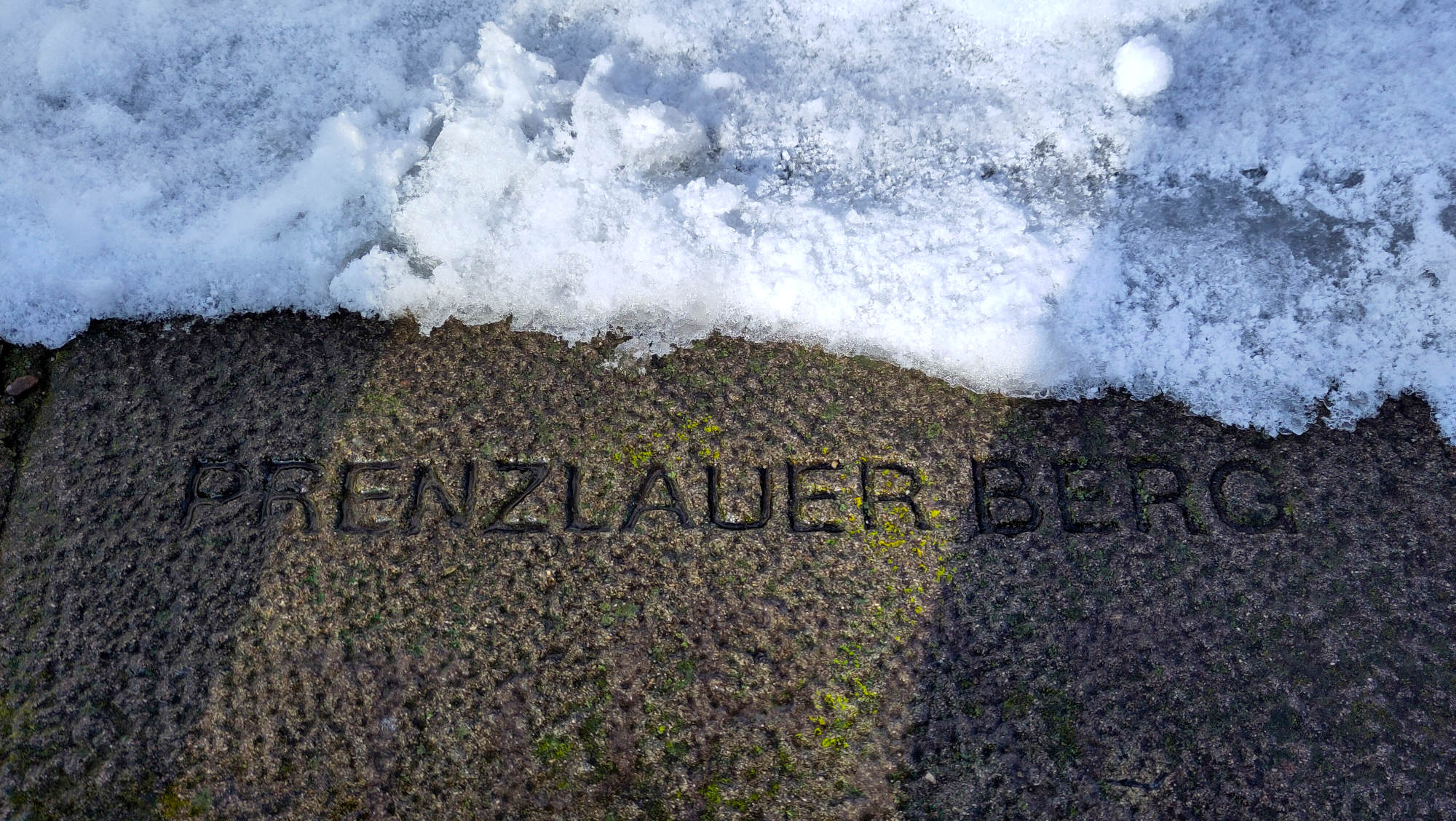
Ich wohne in Prenzlauer Berg und gehe täglich an mehreren Stolpersteinen vorbei. Ich möchte die Geschichten der Menschen erfahren, an die diese Steine uns erinnern sollen. Hier habe ich Zusammenfassungen meiner Erkenntnisse veröffentlicht.
(With thanks to Isabel, my German tutor, for helping to polish this text).
Stolpersteine
From May – September 2024, and January – September 2025, I am based in Berlin, working at the Museum für Naturkunde, an opportunity funded by Alexander von Humboldt-Stiftung.
I'm living in Prenzlauerberg, and every day walk past a number of Stolpersteine. I want to learn the stories of the people commemorated who used to live in my neighbourhood, and summaries of what I have found out are posted here.
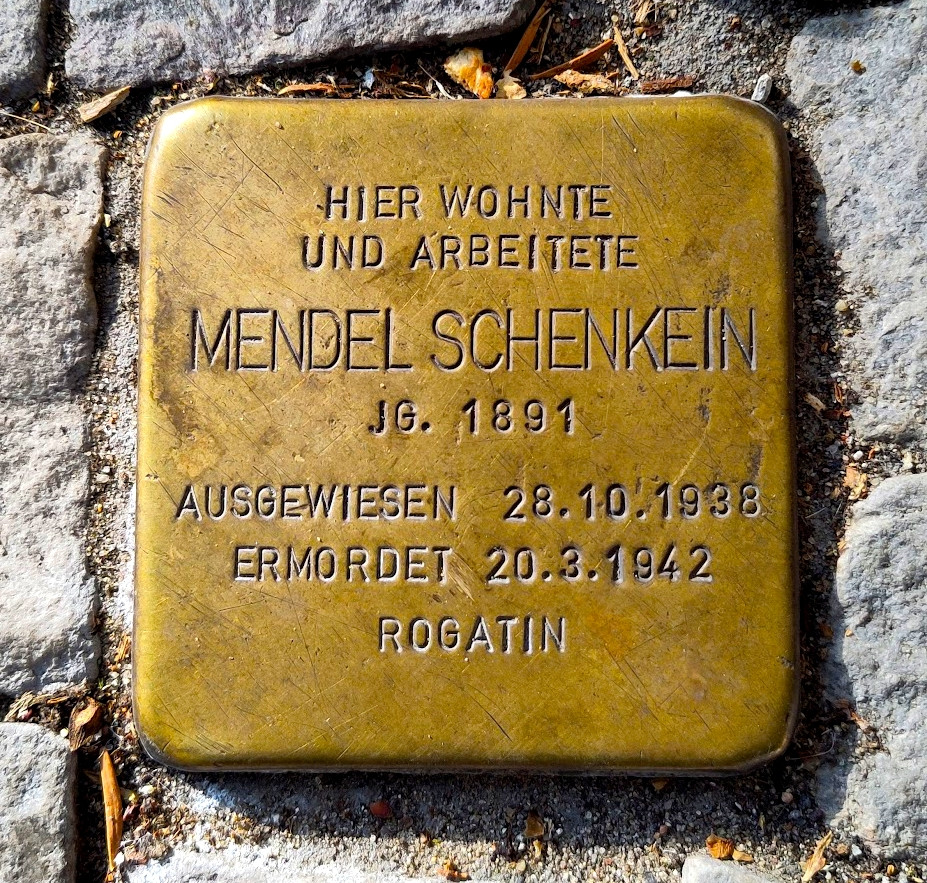
Mendel Schenkein
Mendel Schenkein last lived by choice in Erich-Weinert-Straße, Berlin. He was born in 1891 in Rudnik (now Poland).
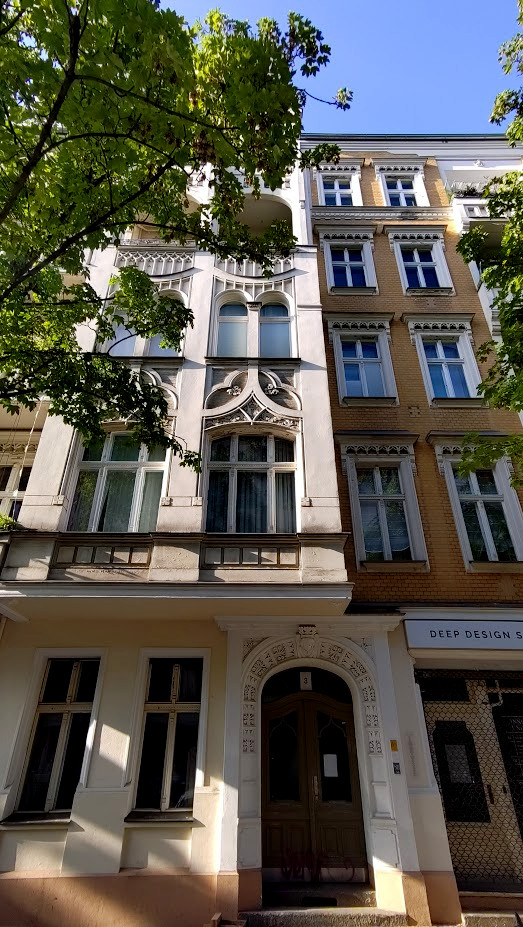
Mendel trained as a watchmaker, and married Berta (nee Weinsteiner) in 1920 – that year, they moved to Berlin and opened a shop on Erich-Weinert-Straße, in the building shown.
The couple ran their business – which became very successful – together. In addition to watch making they traded precious stones. They had two daughters – Erna (born 1921) and Brigitte (1925). They lived in and around the area of their shop, and their children went to school locally.
Life got hard after 1933: Erna was forced to switch to a Jewish school several kilometres away; Mendel was arrested and then deported to Poland in 1938; Berta struggled to run the business, which was ultimately destroyed in Kristallnacht and abandoned by 1939.
Berta and her children fled to England in April 1939. Mendel was shot on November 18, 1942, in Przemyśl, Poland.
Erna joined the Women's Auxiliary Air Force, becoming sergeant, and emigrated to the United states in 1946. She describes Mendel as a gentle man, and later recalled his arrest:
I remember having a dream that the police came to the door, and I woke up and the doorbell was ringing. I jumped up and there was police at the door, one policeman ... asking for my father.
She recalls her mother pleading with them to take her instead, as the family all stood crying.
The policeman had tears in his eyes, patted us on the head and said, 'I can't' ... That was the last time I saw my father.Source | Source | Source.
Max Heidenfeld
The last place Max Heidenfeld lived by choice was Kopenhagener Straße. He was born in 1883 in Rybnik.
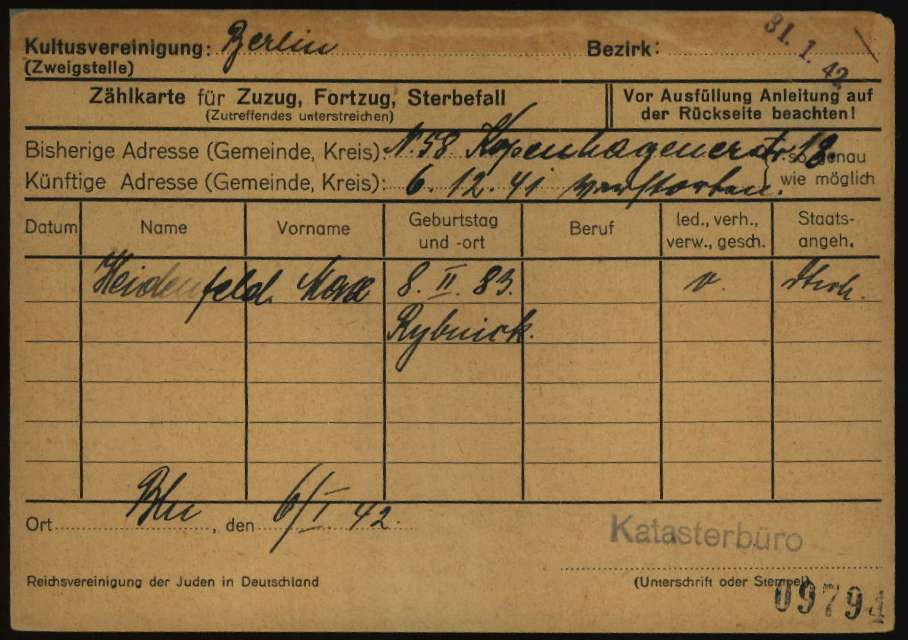
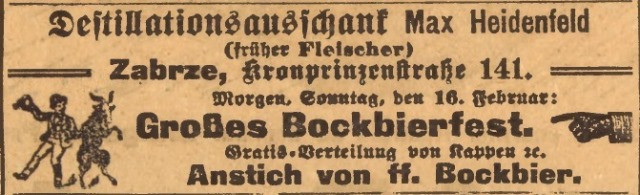
I've struggled to find out much about Max. He had a wife Minna Heidenfeld née Muschel, and a daughter Betty Lotte in 1908, at which point he was working as an innkeeper in Zabrze. He hosted ein Großes Bockbierfest here in February 1908.
I can't find anything about what happened to either Betty Lotte or Minna. I think that at some point later, Max may have married a cashier called Frieda Else. He was deported to the Sachsenhausen concentration camp in April 1941, and murdered on 5 December 1941.
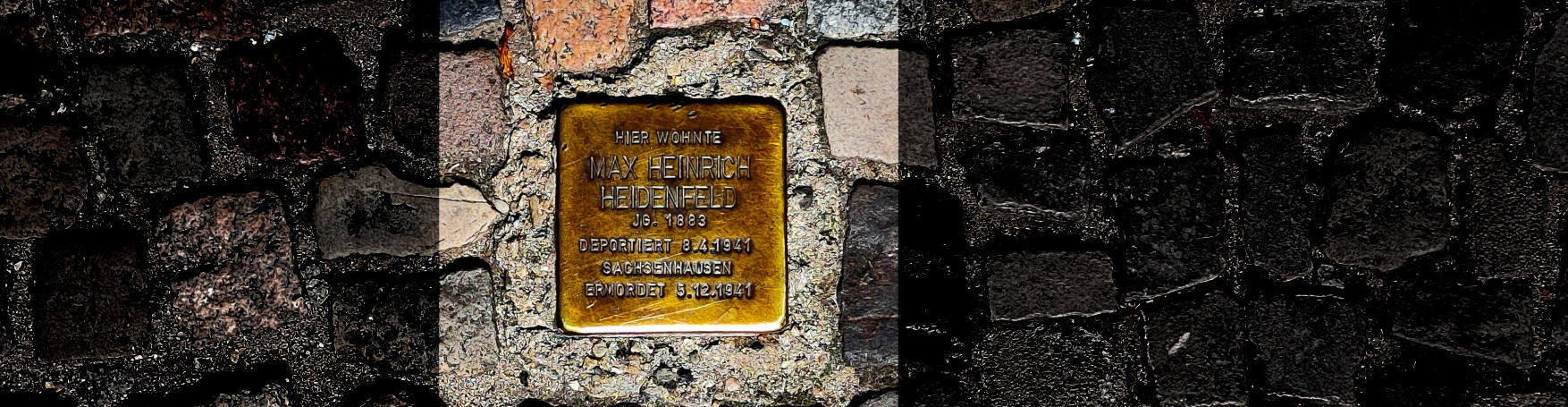
Click on the images to enlarge. The images here show:
- A record card for Max dating from 1941 from Der Reichsvereinigung der Juden in Deutschland (the Reich Association of Jews in Germany); registration cards from which the Gestapo chose deportees. All German Jews were required to register with the Reichsvereinigung der Juden in Deutschland.
- An advert for Max's Großes Bockbierfest, sometime between 1906 – 1908, held in Zabrze.
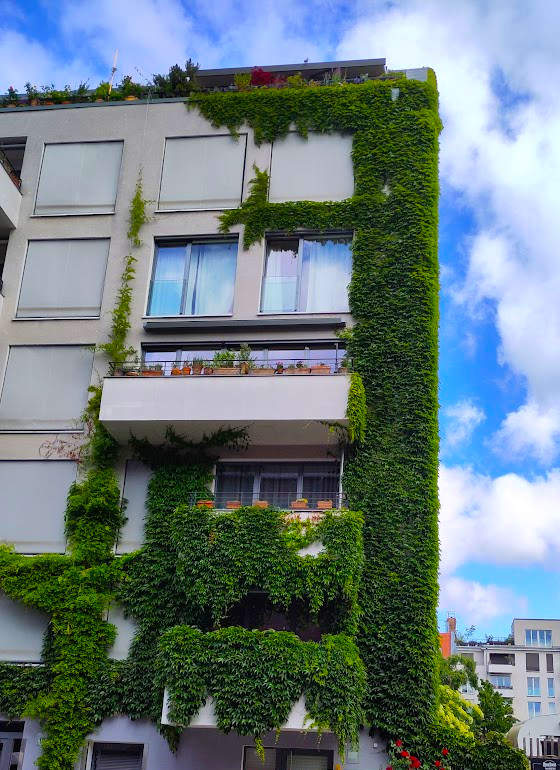
- Two images of the building now at the address Max inhabited on Kopenhagener Straße.
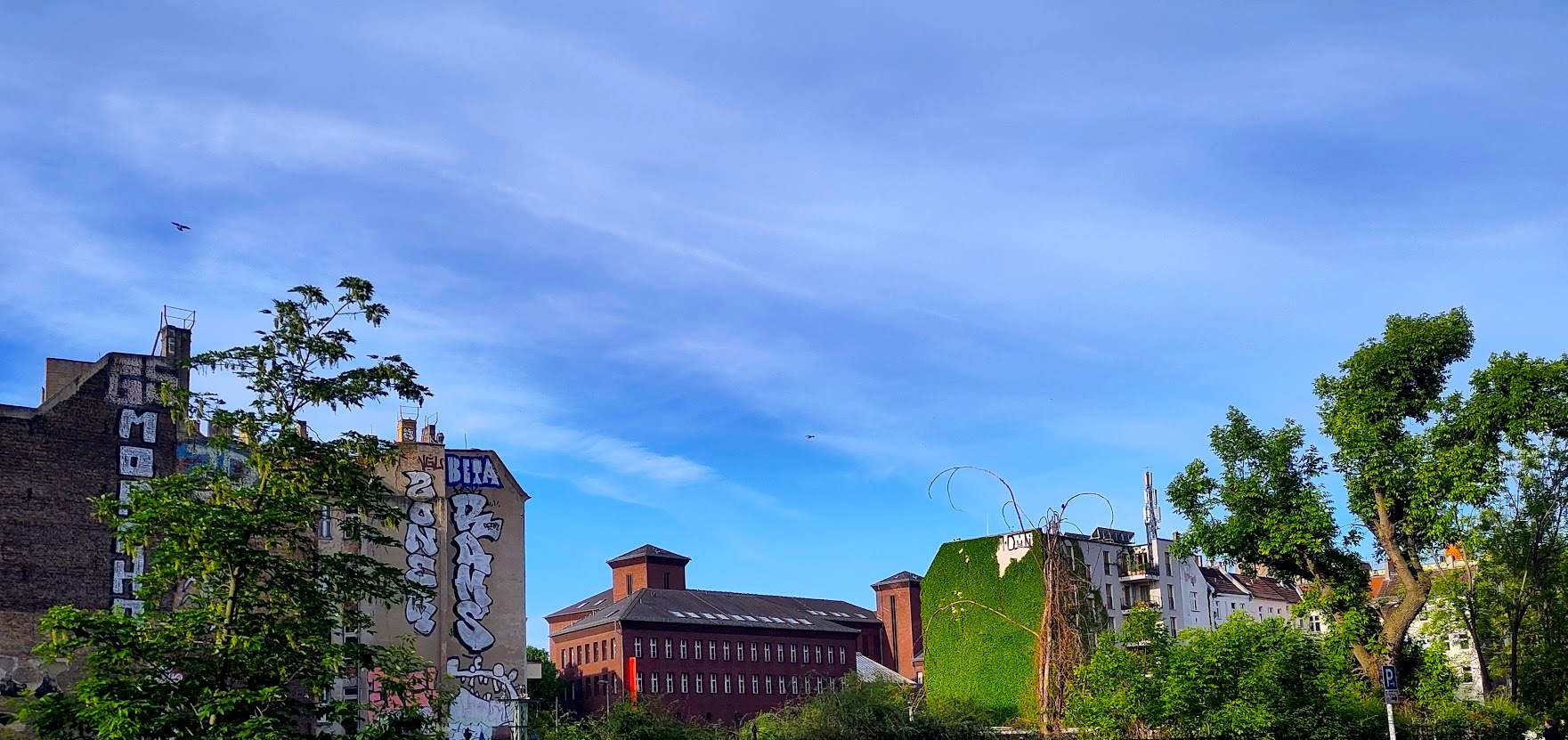
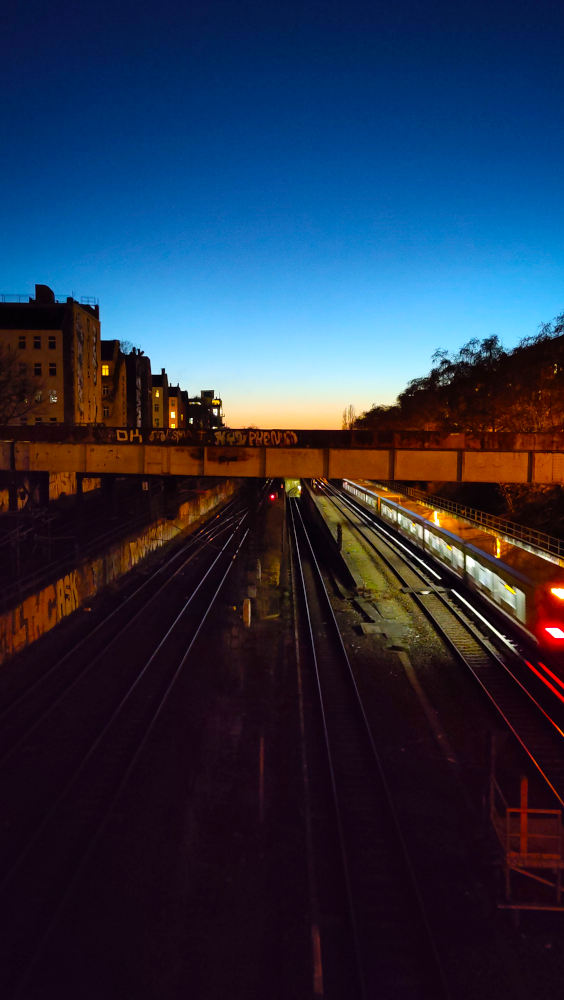
- The railway line that now runs behind this address.
The Noafeldt Family
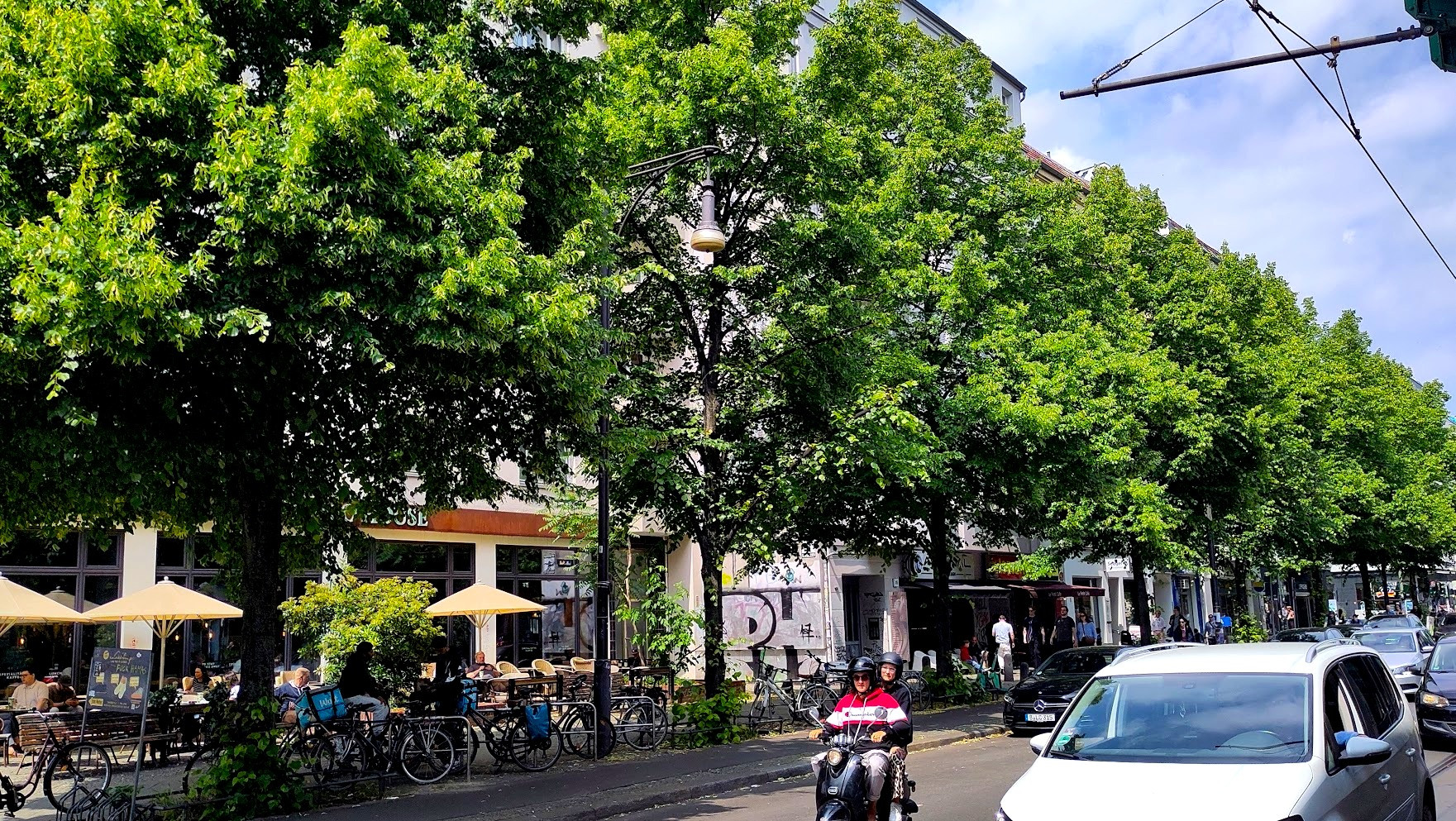
The last place the Noafeldt family lived by choice was on Schönhauser Allee.
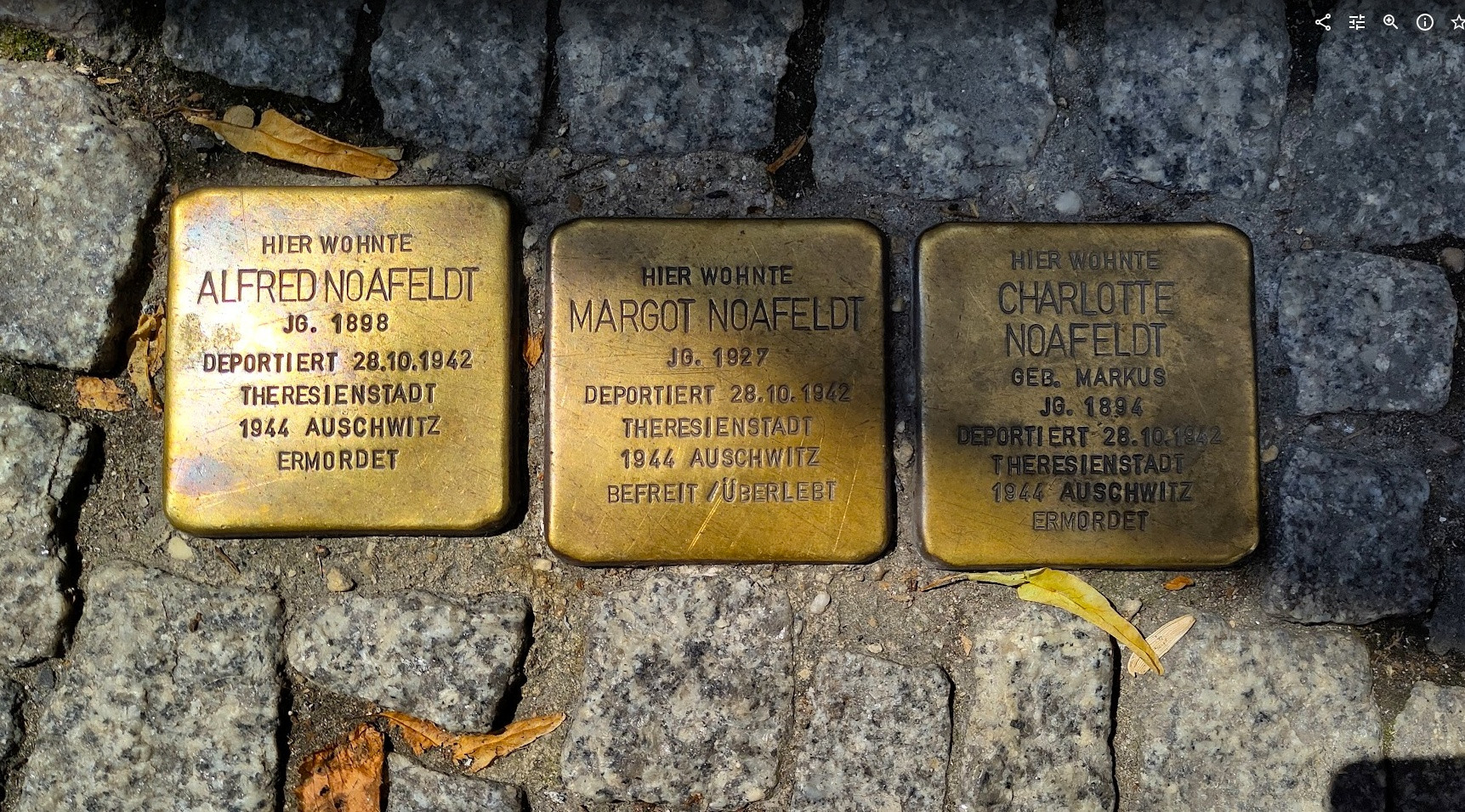
Alfred was born in Neumark in 1898 and Charlotte in 1894, in Budapest. They married sometime before the 1920s, as they moved to Berlin in 1927. Their daughter, Margot, was born in 1927.
Alfred trained initially as a gardner, but further details of his or Charlotte's life aren't easy to come by. By the time they lived in Berlin, he was working for the Jewish Community of Berlin, and Charlotte at a Jewish retirement home.
At first, employees of the Jewish Cultural Association of Berlin were spared deportation, but the family was deported to the Theresienstadt ghetto in 1942, and to Auschwitz in 1944. Alfred and Charlotte were murdered on arrival. Margot was selected as "fit for work", and ultimately liberated.
She emigrated to the USA in late 1945.
Röschen and Salomon Paskusz
Rosa/Röschen and Salomon Paskusz last lived by choice on what is now Erich-Weinert-Straße, Prenzlauerberg.
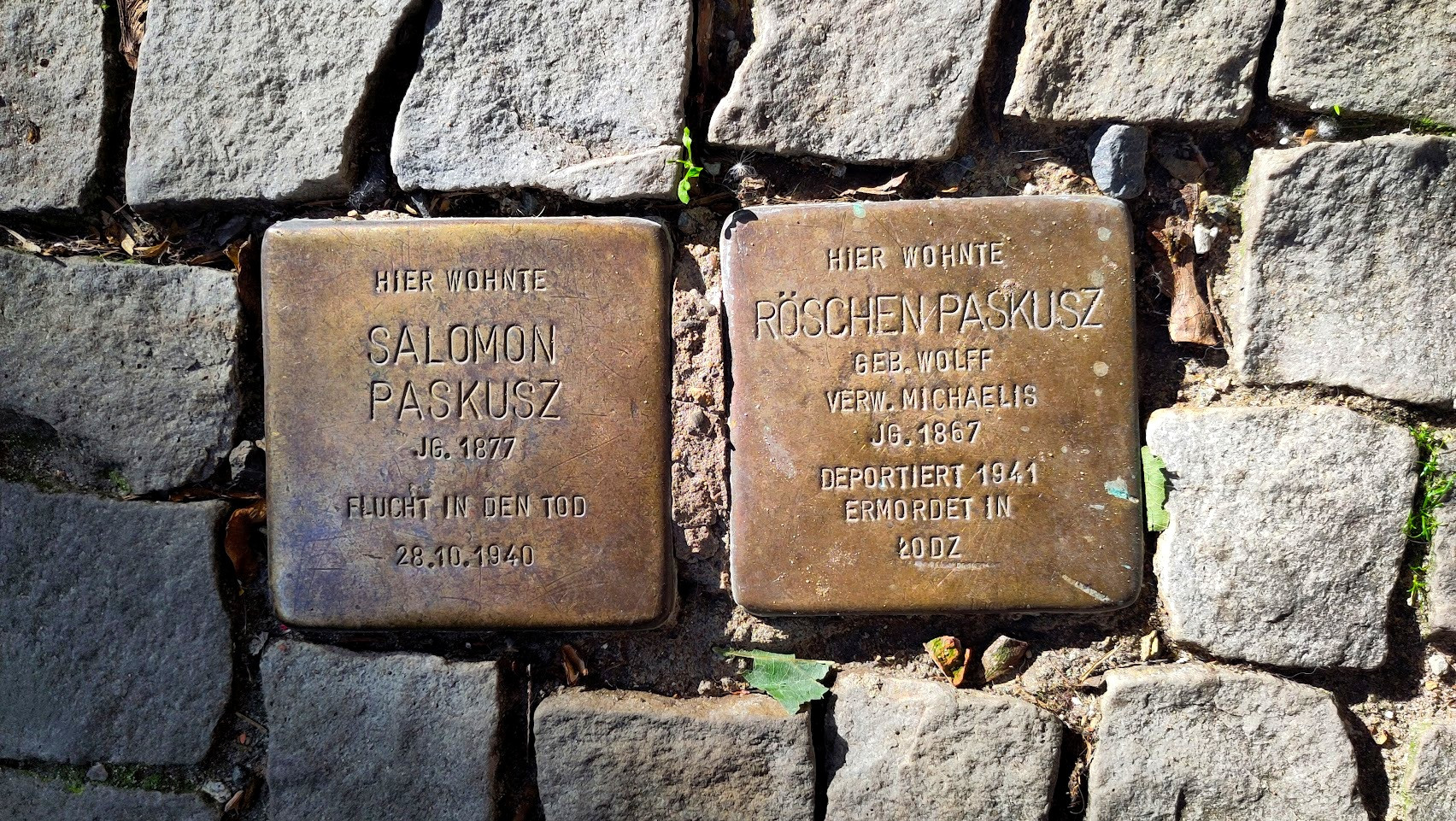
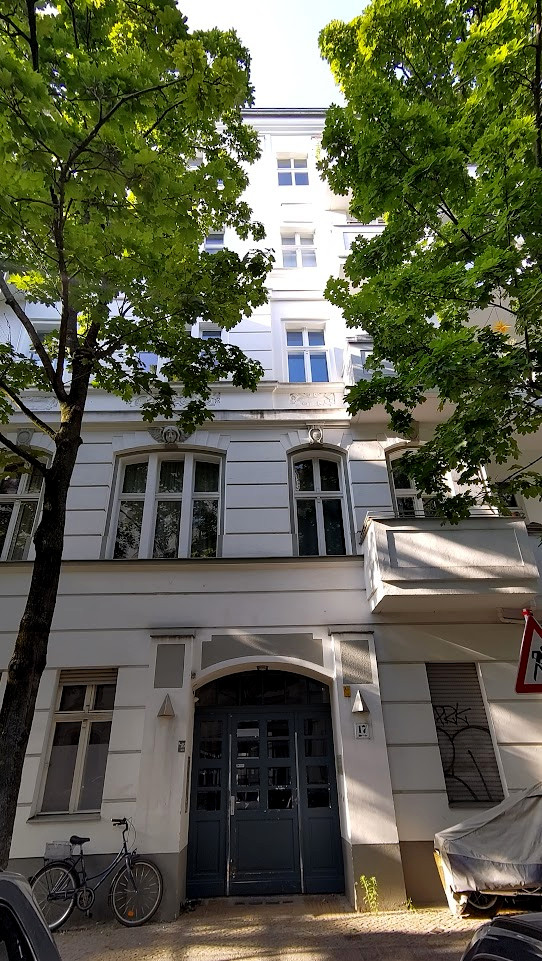
Rosa was born 1867 in East Frisia (Saxony). By 1906 she was living in Berlin: we know because she married there a man called Adolf Michaelis. They had a daughter, Irma, that year.
Adolf died a short while later - it is unclear how. She met Sandor Salomon Paskusz, who had been born in Hungary in 1877, and the two married in December 1910. Sandor worked selling fur and pelts, and Rosa was a stay at home mum. We next pick them up later, shortly before world war two.
By this point, Irma had left, married a man called Mr Wellner. She fled to London shortly before the start of the war (as far as I can tell...), leaving money for her parents who planned to join her shortly. Letters from mother to daughter report that they had been ordered to hand over the money to the Nazis, preventing their escape. In October 1940 Sandor was found dead in his apartment.